If you’re trying to earn money from Instagram in 2026, you’re going to see one phrase again and again on every help page and eligibility checklist:
“Your account must comply with Partner Monetization Policies.”
Most creators read that line, assume everything is okay and move on.
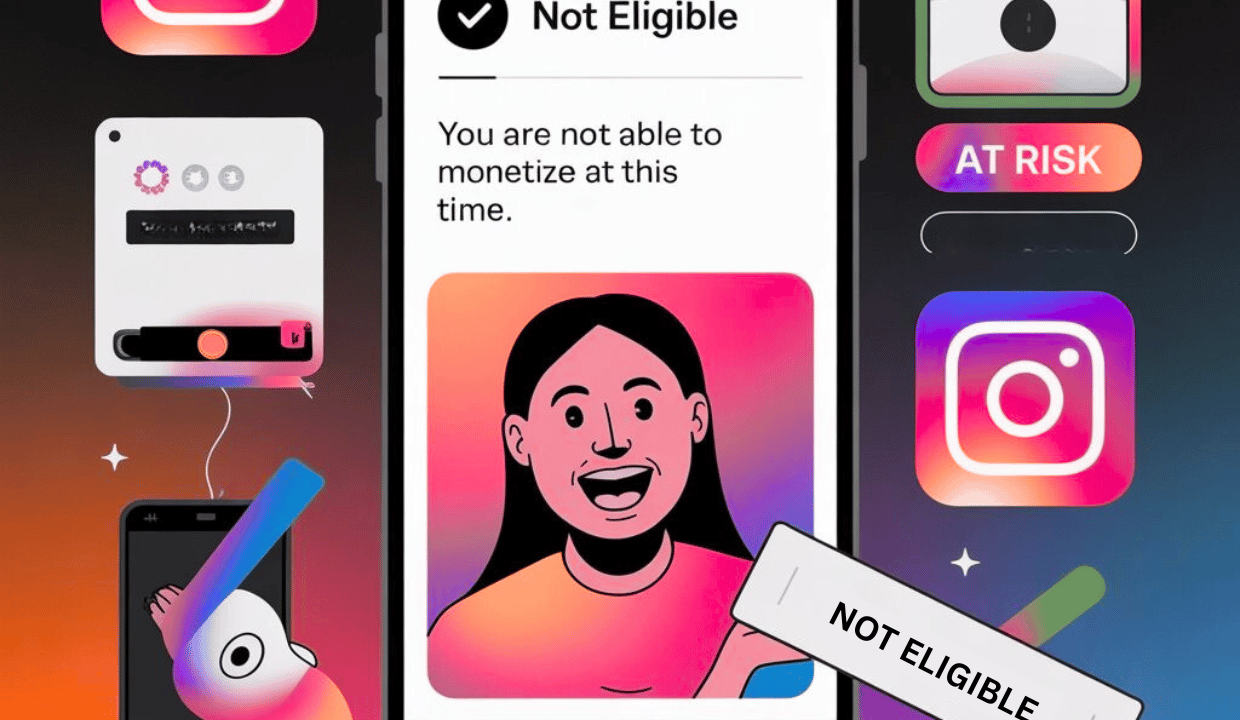
But then they check their Monetization Status and see messages like:
- “Not eligible”
- “At risk”
- “You are not able to monetize at this time.”
The problem is that Instagram rarely explains which exact rule you broke. It usually shows a vague status, which leaves you guessing about what actually went wrong.
This guide breaks everything down clearly so you can understand the policies and fix the issues that are blocking you.
Here you will find a simple, human language breakdown of every major part of Instagram’s Partner Monetization Policies (PMP), what they mean in day-to-day terms, hidden rules most creators never notice and exact steps to stay eligible.
If you need a broader view of Instagram’s requirements, see my full guide on Instagram monetization requirements for 2026.
Here’s a clear breakdown of what the policies actually mean for your account.
1. What Partner Monetization Policies actually are
Instagram’s Partner Monetization Policies apply to your entire account, not just the posts you upload.
They determine whether Instagram trusts you enough to:
- use Subscriptions
- earn Gifts
- activate Badges
- access Reels revenue share
- open an Instagram Shop
- join branded content tools
- receive payouts
- work with Meta as a monetizing partner
You can think of PMP as Instagram’s “creator trust score.”
If you violate these rules, Instagram will remove monetization access, even if your account is growing or has a strong audience.
2. The four pillars of Instagram Partner Monetization Policies
All of Instagram’s monetization rules generally fall into a few main categories:
- Authenticity
- Monetization eligibility and behavioural integrity
- Community safety and brand trust
- Legal and regulatory compliance
Here’s what each category means in plain language, along with examples so you know how it applies to your account.
1. Authenticity: Instagram must believe your audience is real
Instagram does not care how many followers you have.
It cares whether those followers are legit and earned ethically.
Here is what counts as a violation under authenticity:
- You bought followers or likes
If you purchased followers, even years ago, your account may still be flagged.
Instagram’s systems track sudden spikes, inactive fake accounts and bot patterns.
- You use engagement groups
Comment pods and “engagement circles” often violate authenticity rules because they create artificial activity.
- You use follow for follow tactics
Large numbers of reciprocal follows, rapid unfollows or follow spikes look suspicious.
- You use automation
Auto commenting, auto liking or auto following breaks both Instagram rules and PMP.
- You run giveaways that attract irrelevant followers
Mass giveaways with iPhones, AirPods or generic prizes look like inflation tactics, not real audience building.
- You repost trending content without adding original value
Compilation accounts, meme-only accounts or stolen Reels often fail authenticity checks because the audience did not come for your own voice.
- You behave like a spam page
Rapid posting of low effort content, keyword stuffing, irrelevant hashtag blasts and repeated mass tagging trigger authenticity violations.
How to fix authenticity problems:
- Stop all artificial growth behaviours now
- Use only your own content
- Let your follower count stabilise
- Post content that earns real comments and saves
- Remove any third party growth tools from Account Center
- Start building slow, consistent, organic engagement patterns
- If you purchased followers in the past, expect a one to three month “trust rebuild” period
A lot of creators lose eligibility because Instagram thinks their activity looks inauthentic.
2. Behavioural integrity: your account must act like a safe business partner
PMP also covers how you behave on the platform, not just what you post. Your overall activity matters just as much as your content.
Violations under behavioural integrity:
- Repeated Community Guidelines warnings
Even if posts are not removed, warning labels can accumulate and affect monetization.
- Past posting patterns that look risky
Switching niches dramatically, deleting your entire feed overnight or posting only viral bait content triggers integrity checks.
- Using misleading hooks
Clickbait, exaggerated claims, fake discounts, fake testimonials or misleading “before and afters” count as behavioural violations.
- Encouraging harmful actions
Behavior that motivates unsafe challenges, unhealthy dieting, substance misuse or dangerous stunts will block monetization.
- Running scams or spam promotions
Promoting gambling, crypto schemes, fake investment promises, multi level marketing, or shady apps leads to instant ineligibility.
- Encouraging copyright infringement
If your account promotes downloading paid music, pirated apps or illegal streaming, you fail PMP.
How to fix behavioural integrity issues:
- Remove or archive all posts that received warnings
- Clean your feed of misleading captions
- Avoid risky trends and extreme challenges
- Avoid financial, medical or exaggerated claims
- Pivot to stable, educational, lifestyle or niche based content
- Maintain consistent posting, not sudden drastic behaviour changes
You want Instagram to see you as a calm, reliable creator.
3. Safety and brand trust: your content must be advertiser-friendly
Even if your content is not removed for violating Community Guidelines, it may be deemed unsafe for monetization.
Brands do not want their ads placed on content that looks risky, aggressive, political or inappropriate.
Since monetization tools rely on advertisers, Instagram follows strict brand safety rules.
Content types that reduce or block monetization:
- Violence and graphic content
Even mild violence or injuries can trigger safety flags.
- Sexual or suggestive content
Lingerie try-ons, overly sensual posing, adult jokes, explicit dancing and NSFW style comments reduce eligibility.
- Excessive profanity
Heavy cursing in captions or on camera hurts brand suitability.
- Harassment, bullying or aggressive commentary
Argumentative or insulting tone blocks monetization even if not removed.
- Emotionally disturbing content
Dark topics, trauma dumping, fear based content and graphic storytelling damage brand trust.
- Medical, health or wellness misinformation
Weight loss hacks, “cures,” supplements without scientific backing and exaggerated health claims all risk monetization.
- Political content
Angry political commentary, election content, polarising social issues or activism directed at specific groups can restrict monetization.
- Financial misinformation
Crypto schemes, unrealistic trading claims and “get rich quick” breakdowns violate advertiser standards.
How to fix brand safety issues:
- Shift your content to positive, educational, lifestyle, creative or value based
- Remove posts with strong profanity or borderline visuals
- Avoid sensitive health or finance claims
- Keep political opinions off monetized accounts
- Focus on Reels that look clean, aesthetic and safe for advertisers
- Use neutral backgrounds, simple hooks and clear messaging
- Build evergreen, trustworthy formats
Brand safe creators qualify for monetization sooner and stay eligible longer.
4. Legal and regulatory compliance: you must follow real world laws
Instagram must follow laws in every country it operates in, especially regarding minors, advertising, sponsorships, data protection, intellectual property, financial disclosures.
If your account ends up breaking any laws, even by accident, Instagram will remove your monetization access until everything is resolved.
Common legal related violations:
- Copyright violations
Posting music you do not have rights to
Reposting clips from movies or shows
Using others’ videos without permission
- Missing sponsorship disclosure
Doing paid promotions without using the “Paid partnership” label
- Content aimed at children
Accounts primarily targeted at kids cannot monetize due to global child protection laws.
- Selling restricted products
Promoting illegal items, prescription medication, harmful supplements or unapproved medical devices violates both laws and PMP.
- Running giveaways incorrectly
Some countries require legal terms for giveaways.
If your giveaway breaks local rules, you can lose monetization eligibility.
- Misuse of user data
Running contests that ask for personal data and not storing it correctly can violate privacy laws.
How to fix legal related violations:
- Archive all content that uses copyrighted audio
- Only use Instagram’s built in music library
- Use the Paid partnership tag for every sponsored post
- Avoid children’s content, toys, or child centric storytelling
- Follow country specific giveaway rules
- Avoid posting or promoting questionable products
- Keep your niche adult focused and regulation safe
Creators who follow the legal guidelines end up building more trust with both Instagram and their audience over time.
3. How Instagram evaluates your whole account, not individual posts
Most creators misunderstand this.
You can have 80 perfect posts and 5 problematic posts, and Instagram will evaluate the problematic ones when deciding monetization eligibility.
Instagram does not look for perfection.
It looks for risk patterns.
Patterns include inconsistency, rapid niche switch, low quality posting, recycled or watermarked clips, spikes in followers, high report rates from users, content that fluctuates between safe and risky.
A steady, consistent account is one of the biggest signals Instagram trusts when deciding who can monetize.
4. How to make sure you always pass Partner Monetization Policies
Here’s a quick checklist to help you stay eligible for monetization:
1. Be original
Use your own footage, voice, style and ideas. Instagram can spot reused or low-effort content instantly.
2. Grow ethically and slowly
Skip bots, fake engagement tools or anything that feels like a shortcut. Instagram flags these faster than people think.
3. Keep your content brand-safe
Stay away from risky themes, explicit visuals, aggressive takes or anything that might make advertisers uncomfortable.
4. Post consistently
A steady posting rhythm shows Instagram that your account is active and reliable.
5. Be careful with sensitive niches
If you create content around health, fitness, parenting, weight loss or finance, be extra clear, accurate and responsible with your claims.
6. Clean up old content
Archive Reels that use unlicensed music or include messaging that might violate today’s policies.
7. Be transparent with sponsorships
Use the built-in disclosure tools whenever something is paid — it protects both your reach and your eligibility.
8. Keep your audience adult-focused
If your content looks like it’s aimed at kids, Instagram may block monetization features entirely.
9. Follow the laws in your region
This includes copyright, advertising rules and product safety guidelines. Instagram takes legal compliance seriously.
10. Check your Monetization status once a week
Fix warnings as soon as they appear so they don’t stack up over time.
5. Final thoughts: Partner Monetization Policies are strict, but predictable
Instagram isn’t trying to make things difficult.
PMP exists because monetization is a three-way relationship between you, Instagram and advertisers. Instagram needs creators who feel trustworthy, original, brand-safe, legally compliant and consistent.
When you meet those expectations, monetization tends to become far more stable and predictable.
If you want a surefire path to getting your eligibility back on track, these guides will help: