If you want to earn from Instagram in 2026, the first thing to know is that monetization is not unlocked just because you post Reels or have followers.
Meta has made monetization a structured system with very specific rules, and you need to understand them before anything shows up for you.
- Eligibility depends on your account type, country, content history, policy record, and follower thresholds.
- Some features have hard numbers (like 10,000 followers for subscriptions).
- Others use softer criteria like authentic presence and compliance with Partner Monetization Policies.
This guide pulls all of that together in one place, so you can see:
- Exactly what Instagram expects from you before it lets you earn.
- What changed between the early bonus era and the more structured system of 2026.
- How to build an account that’s ready to monetize the second your region/features unlock.
1. The 2026 monetization landscape: From easy bonuses to real requirements
For a while, Instagram monetization felt unpredictable. If you got access to Reels bonuses or early ad tests, you could make decent money just from views. But Meta eventually phased out most of those experiments and shifted toward a more stable, rule-based system.
Example:
- In early 2025, Instagram shut down a program that paid creators when ads ran between posts on their profile, but kept running the ads anyway.
That shift tells you a lot:
- Instagram is done casually throwing money at every test.
- The focus in 2026 is on core monetization products that support Meta’s long-term ad and commerce strategy:
- Subscriptions
- Gifts (Stars)
- Reels ad revenue share
- Branded content tools / Creator Marketplace
- Shopping & affiliate tools
- Subscriptions
If you think monetization is random, it will always feel inconsistent. Once you see it as a system with clear requirements, you can actually plan your way into it.
2. Your monetization map: All the ways to earn on and through Instagram
Before we go deep on requirements, you need a clear map of where the money can actually come from.
- Built-in monetization (Paid through Meta/Instagram)
Instagram also has built-in monetization tools that pay you directly through Meta’s payout system once your account meets the basic eligibility rules.
- Instagram subscriptions
Subscriptions let followers pay a monthly fee for exclusive content like private Stories, Lives, posts and subscriber-only chats. You need a professional account, you must be at least 18 and your country has to be eligible. There is no follower minimum anymore, so even smaller creators can unlock this feature. - Instagram gifts (Stars) on reels/live
Viewers buy Stars and send them as “Gifts” on your Reels or Lives. You earn real money per Star. To qualify you need a professional account, 18+, meet monetization policies and live in a supported region; many up-to-date guides also cite 5,000 followers as a practical minimum. - Ads on reels / revenue share
Instagram runs ads between Reels, and Meta shares a portion of that revenue with you, but only if your account follows their Partner Monetization and Content Monetization Policies. - Branded content tools & creator marketplace
Instagram also has built-in tools for paid partnerships, where brands can tag you, you can tag them and all the collaboration rules run through Meta’s branded content system. - Shopping & commerce tools
This includes product tags, Instagram Shops and certain affiliate setups that let you sell directly inside the app, as long as your account and products meet Instagram’s commerce rules.
These features are where Instagram’s own rules hit hardest, so this is where Instagram monetization requirements matter the most.
- Off-platform monetization (Instagram as the engine, not the bank)
You can still earn even if you never use Instagram’s built-in monetization tools.
You can make money through affiliate links in your bio or Stories, brand deals and sponsored posts or by selling your own digital products, memberships, coaching or services through your site.
Meta is not paying you directly for these, but your account health still matters. If your reach drops because of policy issues, every income stream you rely on drops with it.
3. Core Instagram monetization requirements in 2026 (The non-negotiables)
These are the basics Instagram checks before showing you any earning tools, and no amount of views can override these.
- Professional account & age
Instagram requires you to use a professional account (Creator or Business) and be 18+ to access income tools like Subscriptions and Gifts.
- Professional accounts unlock the professional dashboard, where monetization eligibility and controls live.
- Age is tied to legal, contract and tax obligations on Meta’s side.
- Eligible country or region
You must live in a country where that specific feature is available. Instagram’s own monetization policies explicitly say: if you move to an ineligible country, you may lose access.
So Instagram monetization requirements are not just about your content. Your eligibility also depends on whether your country supports the feature.
- Subscriptions have one availability list.
- Gifts have another.
- Reels ads and some commerce tools have their own.
- Partner Monetization Policies (PMP)
Meta’s Partner Monetization Policies are the main rules Instagram uses to judge whether your whole account is trustworthy, not just a single post.
They demand things like:
- Authentic engagement (no buying followers or using engagement pods).
- No repeated policy violations.
- No deceptive behaviour or spammy posting patterns.
Meta has even rolled out system-wide efforts against spam and manipulative tactics: accounts that use irrelevant hashtags or misleading posts to chase monetization can be restricted.
- Content Monetization Policies (CMP)
These rules decide which types of content Instagram is willing to place ads on and which types they will automatically block from earning.
Key themes:
- You must own the rights or have permission.
- No violent, hateful, or sexually explicit content.
- No dangerous misinformation or “clickbait” that harms users.
Even if a Reel doesn’t get taken down, a CMP issue can make it ineligible for monetization while still being visible.
- Community guidelines & “Not for Kids”
Along with PMP and CMP, your content has to follow Instagram’s community guidelines.
Instagram also blocks monetization for accounts that are mainly targeted at children, which is something many family or kids-niche creators only realize when their applications get rejected.
4. What’s changed by 2026: From experimental bonuses to structured tools
To understand how Instagram monetization works in 2026, it helps to look at the features Meta has discontinued and what replaced them.
- The rise and fall of bonus-style programs
Instagram ran multiple bonus programs (Reels Play, profile ads revenue, Breakthrough-style incentives) between 2021 and 2024, sometimes paying huge sums to selected creators.
But in early 2025, Instagram ended payouts for profile ads—a test where creators earned revenue from ads shown between posts on their profiles—even though the ads themselves continued.
This means:
- Expect fewer “free money experiment” programs.
- Expect more emphasis on stable, policy-driven revenue tools.
- Consolidation around core features
As of 2026, Instagram’s stable monetization foundation looks like this:
- Subscriptions with clear follower + policy requirements.
- Gifts / Stars with clear eligibility guidelines (professional account, 18+, policies, regional access and practical follower minimums).
- Reels ad revenue share tied tightly to Partner Monetization Policies and Content Monetization Policies.
One-time bonuses come and go, so you’re better off building your income around the features that have clear requirements and long-term stability.
5. Feature-by-feature: Instagram monetization requirements in detail
Let’s go through each monetization feature one by one, so you know what Instagram expects for every tool.
- Instagram subscriptions
What it is
Subscriptions let your followers pay a monthly fee in exchange for exclusive content such as private Stories, Lives, posts and subscriber-only chats. It is predictable monthly income and works well for creators who share deeper guidance or behind-the-scenes access.
Core Instagram monetization requirements for subscriptions
- Professional (Creator or Business) account.
- At least 10,000 followers.
- 18 years or older.
- Based in a country where Subscriptions are available.
- Compliant with PMP, CMP and Community Guidelines.
Many guides and Meta resources also note that accounts primarily posting kids’ content are not eligible.
How to make subscriptions actually work
- Promise concrete perks (e.g. “weekly live breakdowns,” “templates vault,” “subscriber-only feedback sessions”), not vague “exclusive content.”
- Onboard your first 20–50 subscribers in a “founding members” style launch, then overdeliver to generate word-of-mouth.
- Treat Subscriptions as phase 2: first use free content to build trust, then convert the most engaged 1–5%.
- Instagram Gifts (Stars)
What it is
Gifts let your viewers support you by buying Stars and sending them on your Reels or Lives. Each Star has a small cash value, and the total adds up, especially if you post content that feels personal or relatable.
Eligibility
- Professional account.
- 18+ years old.
- Meet Partner Monetization Policies.
- Live in a region where Gifts are rolled out.
- Many current creator-facing resources list 5,000 followers as the practical minimum for Gifts eligibility.
How it pays
- Instagram Gifts are built on Meta’s Stars system; each Star is worth a small fixed amount (around 1 cent USD, though your net depends on fees and promotions).
How to actually get Gifts:
- Run Lives with real-time interaction: Q&As, breakdowns, critiques. Lives generate more Gifts than static Reels.
- Add subtle calls to action (“If this helped you, you can send a Gift—it supports more free content”).
- Focus on content that genuinely helps or entertains; Gifts are a gratitude signal, not a tip jar button.
- Reels ads / revenue share
What it is
Instagram places ads between Reels, and Meta shares part of that revenue with you as long as your account meets their monetization rules. This is the most straightforward way to earn from Reels, especially if your audience is in high-value regions.
Requirements (high-level)
- Professional account.
- Reside in an eligible country and have the feature rolled out to you.
- Comply fully with Partner Monetization Policies and Content Monetization Policies.
Instagram rarely publishes a follower minimum here; instead it focuses on:
- Originality and brand-safe content.
- Stable posting history.
- Healthy watch-time and engagement patterns.
How to design Reels for monetization, not just views
- Reels that earn money usually have strong retention, so start with a clear hook in the first few seconds and avoid any awkward pauses.
- Keep your content brand-safe because even harmless jokes can get flagged and limit your earning tools.
- Build a consistent theme instead of chasing one-off viral posts. Viral hits look nice on your analytics, but a steady, brand-safe series builds far more predictable income.
- Branded content tools & creator marketplace
What it is
These are Instagram’s built-in tools for paid partnerships. Brands can tag you, you can tag them and, in some regions, you can join the Creator Marketplace so brands can find and hire you directly. It keeps everything transparent and within Instagram’s rules.
Requirements
- You need a professional account.
- Your profile must follow Meta’s Partner Monetization Policies and Branded Content Policies
- Your account should have a real, consistent presence. Instagram looks at your overall history, not just your last ten posts.
Extra hidden requirement
- You also need to correctly disclose sponsored posts. If you skip the “Paid partnership” tag or try to hide ads, Instagram can flag your account and hurt your monetization access overall.
Example strategy
If you’re a wellness creator, build trust first with non-sponsored content like simple routines and educational tips. When you partner with a brand, use the “Paid partnership” tag and keep your tone consistent with your usual content so your audience doesn’t feel like the vibe suddenly changed.
- Shopping & affiliate tools
What it is
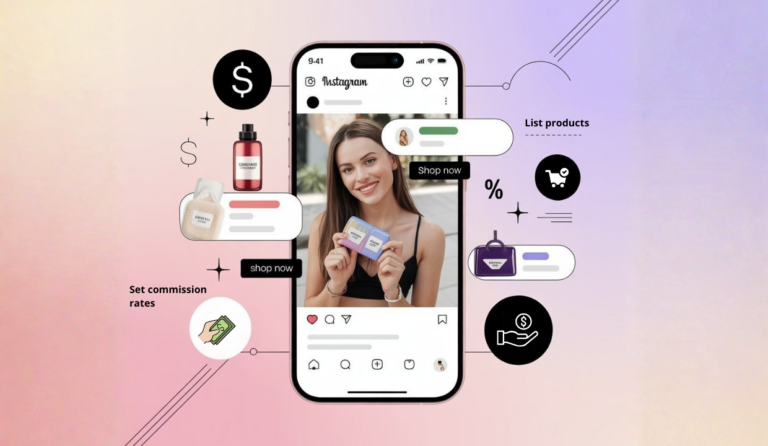
These are Instagram’s tools that let you tag products, recommend items and earn through approved affiliate programs. If your account meets Instagram’s commerce rules, you can create a shop, tag products in Reels or Stories and earn commissions from sales.
Requirements
- You need a professional account and your profile has to be approved for Instagram’s commerce features. That usually means having a linked product catalog, supported products, a compliant website and being in a region where these tools are available.
- There’s no strict follower minimum for most shopping or affiliate tools, but they still fall under Instagram’s broader monetization rules through PMP and CMP, so your account health matters.
Where it works best
- Niche accounts with clear purchase intent: fitness programs, templates, planners, products you can demonstrate.
- Creators willing to treat Instagram as top of funnel and use a website/email list to close sales.
6. Region & country: The requirements you can’t bypass
You can’t hack your way into country eligibility. It’s one of the most frustrating parts of Instagram monetization, but it’s also the most straightforward.
Meta puts it very clearly
“To monetize, you must reside in an eligible country where the product or feature is available. You may lose your ability to monetize if you move to an ineligible country.”
Steps to follow
- Open your Professional Dashboard and check your Monetization Status. Instagram shows whether a feature is available, at risk or unavailable in your region.
- You can also check the official help pages for each monetization tool, because availability often varies across Subscriptions, Gifts, Shops and other features.
- If your country isn’t supported for a specific feature, focus on the things you can control, building income through brand deals, affiliate links, services or digital products, using the features you already have and keeping your account compliant so when your country gets added, you’re ready immediately.
7. How to check your monetization status (and understand the labels)
Instagram does give you signals, but they’re not obvious unless you know where to look.
Steps to follow
- Go to your profile.
- Open Settings.
- Tap Creator tools and controls or Business tools and controls.
- Tap Monetization → Monetization status or Eligibility.
You’ll usually see one of these:
- Eligible – You meet baseline Instagram monetization requirements; some tools may still need manual activation or rollout.
- At risk – Something in your content or behaviour is close to violating policies (take this seriously).
- Ineligible – Either serious policy issues or you don’t meet requirements yet.
- Not available in your region – Nothing is “wrong” with you; your country is simply not supported for that product.
If you see “At risk”, click through and clean up whatever is mentioned before it becomes “Ineligible.”
8. Hidden tripwires: Why eligible-on-paper accounts get blocked
Even creators who look perfect on the surface can be silently blocked from monetization. Common tripwires:
- Reused content / watermarked reposts
- Reposting TikToks with watermarks or compiling other people’s clips can make your content ineligible. PMP/CMP expect original or properly licensed material.
- Reposting TikToks with watermarks or compiling other people’s clips can make your content ineligible. PMP/CMP expect original or properly licensed material.
- Fake engagement & spammy tactics
- Buying followers or using irrelevant hashtags to farm impressions can trigger spam and authenticity filters. Meta has openly said it is demoting manipulative tactics and restricting monetization for those accounts.
- Buying followers or using irrelevant hashtags to farm impressions can trigger spam and authenticity filters. Meta has openly said it is demoting manipulative tactics and restricting monetization for those accounts.
- Borderline content (especially around kids, health, or sensitive topics)
- Accounts mainly targeting children or heavily promoting unverified health “miracles” are high risk for monetization issues, even if they don’t get banned.
- Accounts mainly targeting children or heavily promoting unverified health “miracles” are high risk for monetization issues, even if they don’t get banned.
- Unlabeled branded content
- Doing sponsorships without using “Paid partnership” tools violates Branded Content Policies and can hurt eligibility over time.
- Doing sponsorships without using “Paid partnership” tools violates Branded Content Policies and can hurt eligibility over time.
The important thing to remember is that Instagram monetization requirements aren’t only based on what you’re doing right now. Old issues on your account can still affect your eligibility today.
9. Follower & engagement thresholds: Realistic benchmarks
Instagram doesn’t give one universal monetization threshold, but when you look at Instagram’s official documentation and the latest creator updates, you can get a clear idea of what they expect in 2026.
- Instagram subscriptions
- Professional account + 10,000+ followers, 18+, compliant, supported region.
- Professional account + 10,000+ followers, 18+, compliant, supported region.
- Instagram gifts
- Professional account, 18+, compliant, supported region; many current resources cite 5,000+ followers as the typical minimum for eligibility.
- Professional account, 18+, compliant, supported region; many current resources cite 5,000+ followers as the typical minimum for eligibility.
- Badges / live monetization and related tools
- Often requires at least 10,000 followers and compliance, depending on the country.
- Often requires at least 10,000 followers and compliance, depending on the country.
- Brand deals (off-platform)
- Even nano creators with 1,000-10,000 followers can earn meaningful amounts when their niche and engagement rate are strong.
- Even nano creators with 1,000-10,000 followers can earn meaningful amounts when their niche and engagement rate are strong.
This means
- Under 5k followers: focus on building engagement and niche clarity. Monetization will mostly be brand deals, affiliate, services.
- 5k-10k: work toward Gifts + brand deals; start mapping a future subscription offer.
- 10k+: meet the core Instagram monetization requirements for Subscriptions and often other tools, if your region and policies line up.
10. How instagram pays you
Once you start earning, how Instagram calculates and pays out your revenue becomes much more important.
- Payout infrastructure
Meta uses its own payout system, typically tied to your bank or payment provider, and requires:
- Identity verification (KYC).
- Tax information based on your country.
You normally must hit a minimum payout threshold (often around $100 USD or local equivalent) before funds are disbursed, similar to other ad platforms.
- Revenue logic
- Subscriptions – You set a monthly price; Meta may waive or reduce its fee for some periods or programs.
- Gifts (Stars) – You earn a small fixed amount per Star; total monthly income depends on how often your audience gifts in Lives/Reels.
- Reels revenue share – Depends on ad impressions, watch time, and brand safety of your content.
That’s why strong retention, repeat viewers and brand-safe content often end up being just as important as your overall view count.
11. Matching your stage to the right monetization path
Instagram monetization works differently depending on your size. A creator with 2000 followers doesn’t get the same opportunities as someone with 100,000, so it helps to look at what matters at each stage.
- Nano creator (1000-5000 followers)
Likely don’t meet thresholds for core built-in tools (yet).
Focus on:
- Crystal-clear niche (e.g., “budget skincare for sensitive skin” vs “beauty”).
- High-engagement content: saves, DMs, replies.
- Off-platform monetization: affiliate links, small brand deals, simple digital products.
Goal: hit 5000 followers with strong engagement while keeping your account squeaky-clean on policies.
- Mid-tier creator (10,000-50,000 followers)
You likely qualify for Subscriptions and may qualify for Gifts depending on region.
Focus on:
- Launching a simple subscription offer (e.g., monthly Q&A + templates/notes).
- Running regular Lives that encourage Gifts.
- Packaging your reach + cases into media kits for better-paying brand deals.
Goal: Build a stack: small but reliable subscription base + Gifts + 1-3 brand deals per month.
- Established creator (50,000+ followers)
At this stage, most core monetization tools become viable if region-eligible and policy-compliant.
Focus on:
- Diversifying: Subscriptions, Gifts, brand deals, own products, affiliate.
- Negotiating serious rates backed by data (saves, shares, retention, click-through).
- Moving your most loyal followers into owned channels (email list, community, course platform).
12. A 3-6 month prep plan to meet Instagram monetization requirements
Here’s a simple plan you can follow over the next few months to get your account ready for monetization.
Step 1: Clean up your account
- Switch to a Creator or Business account if you haven’t already.
- Audit your posts: archive anything that looks like it might violate Community Guidelines, CMP or PMP (watermarked reposts, risky health claims, explicit jokes).
Step 2: Stabilize your content system
- Commit to a realistic posting cadence:
- 3-5 Reels/week
- 2-5 Stories/day
- 1-2 Lives/month (more if you want Gifts to work).
- 3-5 Reels/week
- Choose 2-3 recurring content formats so your audience knows what to expect (e.g., “Monday breakdowns,” “Wednesday myths,” “Friday deep dive”).
Step 3: Build engagement, not just follower count
- Reply to comments thoughtfully (not just emojis).
- Use question stickers and polls in Stories to collect responses you can screenshot (anonymized) as social proof.
- Create save-worthy posts: checklists, frameworks, swipe-through micro-guides.
Step 4: Watch your monetization status weekly
- Check the Monetization tab in your Professional Dashboard once a week.
- Fix “At risk” warnings early-don’t wait for “Ineligible.”
Step 5: Design your first paid offer in advance
- For Subscriptions:
- Outline 1-2 exclusive series you can deliver monthly.
- Decide on pricing tiers and what each gets.
- Outline 1-2 exclusive series you can deliver monthly.
- For Gifts:
- Plan recurring live formats where Gifts make sense (e.g., “office hours,” critique sessions, live tutorials).
- Plan recurring live formats where Gifts make sense (e.g., “office hours,” critique sessions, live tutorials).
When you finally meet the requirements for a monetization feature, it’s better to switch it on with a clear plan instead of figuring things out at the last minute.
13. Future-proofing: Building a business that survives Meta’s experiments
The last few years showed us something important: Meta can launch and kill creator monetization tests at any time. Profile ads payouts, broad Reels bonuses, gone or heavily restricted now.
So the real play for 2026 and beyond:
- Treat Instagram monetization requirements as a useful constraint, not a cage.
- Use Instagram to build trust, proof and momentum, then:
- Monetize with subscriptions and Gifts where available.
- Layer brand deals and commerce on top.
- Move your core community into spaces you own (email, site, course/membership platforms).
If you take this approach, any changes Meta makes to bonuses or test features won’t affect your income in a serious way. They’ll feel like small additions instead of something you depend on.